Guide
Scuba diving in Costa Rica
Where to dive, when, and how to get certified
Costa Rica is a big-animal dive destination rather than a calm coral one: think rays, sharks, turtles and schooling fish around Pacific islands and pinnacles. The main areas are Guanacaste (including the Bat and Catalina Islands), Caño Island off the Osa Peninsula and, for experienced divers on liveaboards, Cocos Island, with smaller reef diving on the Caribbean.
What makes diving in Costa Rica different
Scuba diving means breathing compressed air from a tank so you can stay underwater, usually between 5 and 30 meters deep, for 40 minutes to an hour at a time. In Costa Rica, the appeal isn't long walls of colorful hard coral. It's wildlife. The Pacific coast is fed by nutrient-rich water that draws in big schools of fish and the animals that hunt them: white-tip reef sharks, eagle rays, devil rays and mantas, turtles, moray eels, octopus and, in some places and seasons, bull sharks and hammerheads. Whales and dolphins are often seen on the boat ride.
The trade-off is that visibility changes a lot, from murky to excellent, depending on season, plankton and rain. Go in expecting variable conditions and lots of life, and you'll enjoy it. For a deeper dive into specific sites, sea life and regions, Scuba.cr has a Costa Rica scuba diving guide worth browsing.
Guanacaste: the most accessible diving
Northern Guanacaste is where most visitors dive, from towns like Playas del Coco, Ocotal, Flamingo and Potrero. Boat rides are short, and there are dive centers for every level.
- Local sites near Playas del Coco and Ocotal: Rocky islets and pinnacles 10 to 30 minutes out, with reef fish, rays, octopus and frogfish. Good for courses and refreshers.
- Catalina Islands: A chain of rocky islands off Playa Flamingo and Potrero, known for rays (including devil rays and, at times, mantas) and big schools of fish.
- Bat Islands (Islas Murciélago): Off the Santa Rosa peninsula in the far north. This is advanced diving, with strong currents and exposed conditions. It's famous for bull sharks, which PADI notes are most often seen from May to November.
Between about December and April, the Papagayo winds blow hard in the north. They can make crossings rough and cause upwelling, which brings cooler water, sharp temperature changes at depth (thermoclines) and green, plankton-rich water. Many divers bring a 5 mm wetsuit or hood for those months. See our Guanacaste section for the region.
Central and Southern Pacific
- Manuel Antonio and Quepos: The tourism board lists rocky points and islands near Manuel Antonio National Park, with underwater rock formations and small caves. It's mostly relaxed, shallow diving. Our Central Pacific section covers the area.
- Marino Ballena National Park: Near Uvita, with rocky reefs around the islands and the Tres Hermanas rocks. Humpback whales use these waters in 2 seasons, roughly December to April and again from about July to October, so you might hear them underwater.
- Caño Island Biological Reserve: About 45 minutes by boat from Drake Bay, Caño Island is one of the best dives in the country, with coral beds, turtles, rays, white-tip reef sharks and large schools of fish. Daily visitor numbers are limited, so dives are booked through licensed operators, mostly from Drake Bay and Uvita. See our Southern Pacific section.
Cocos Island: the big one
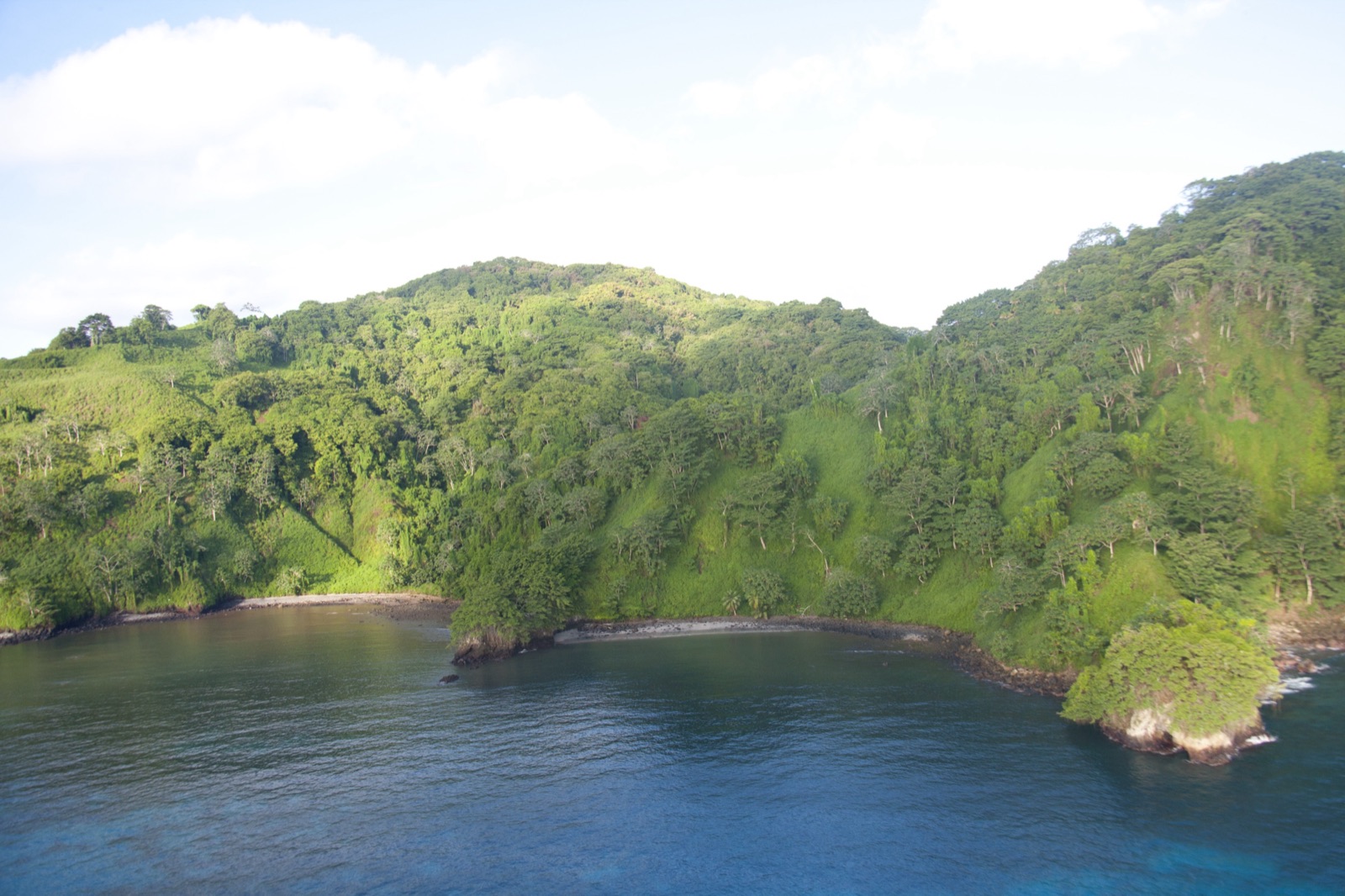
Cocos Island National Park sits about 550 kilometers southwest of the mainland and has been a UNESCO World Heritage Site since 1997. It's known around the world for large schools of scalloped hammerhead sharks, plus white-tip reef sharks, Galápagos sharks, rays and, at times, whale sharks.
There's no hotel or airstrip. The only way to dive it is on a liveaboard boat, with a crossing of 36 hours or more each way, so trips usually run 8 to 10 days. Currents, depth and open-ocean conditions make it a destination for experienced divers, and most operators ask for an advanced certification and a decent number of logged dives. PADI notes that hammerhead encounters tend to peak from May to November. Collecting anything on or around the island is forbidden. Read more in our Cocos Island section.
The Caribbean side
The south Caribbean has Costa Rica's main coral reefs, at Cahuita National Park and in the Gandoca-Manzanillo Wildlife Refuge. Diving here is shallower and more about coral, sponges and reef fish than big animals. Rivers and rain can cloud the water, and the calmest months are often September and October. Our Caribbean section has more.
When to dive
Costa Rica is diveable all year, but conditions change by season:
- May to November: The rainy season on the Pacific. PADI describes it as the best time for advanced divers looking for big pelagic animals, with typically 1 or 2 hours of rain in the afternoon.
- About August to December: Often calmer seas and less wind, with visibility that PADI says can reach about 30 meters. A good window for beginners and macro life.
- December to April: Dry, sunny and busy. Good conditions in the south; windy, cooler water in northern Guanacaste.
How to get certified
You don't need a certification to try diving. A "try dive" (PADI calls it Discover Scuba Diving) lets you dive shallow with an instructor after a short briefing, often starting in a pool or calm water.
To dive on your own with a buddy, you need an entry-level certification such as PADI Open Water Diver, NAUI Scuba Diver or SSI Open Water Diver. Courses are offered all over Costa Rica. The typical structure is:
- Knowledge development: Theory on pressure, equipment and safety, often done online before your trip so you don't spend vacation days in a classroom.
- Confined water dives: Skills practice in a pool or calm, shallow water.
- 4 open water dives: Real dives with your instructor, usually over 2 days.
Most courses take 3 to 4 days. For PADI, the minimum age is 10 (younger divers get a junior certification with depth limits), and you'll need to show you can float or tread water for 10 minutes and swim 200 meters (or 300 meters with mask, fins and snorkel). After certifying, you're qualified to dive to 18 meters. You'll also fill in a medical questionnaire, and some conditions need a doctor's sign-off before you dive.
Choosing a dive operator
- Check they're licensed. Diving in Costa Rica falls under the country's adventure tourism regulations, and the tourism board advises choosing operators with valid permits that belong to recognized associations.
- Ask about emergency equipment. The tourism board advises checking that the boat carries the emergency equipment the law requires. In practice, ask to see the emergency oxygen and first aid kit, and ask how they'd call for help.
- Look at group size and briefings. Good centers keep groups small, brief every dive clearly and match the site to your level.
- Look at the gear. Rental equipment should be clean, serviced and fitted to you.
Safety basics
- Never hold your breath on scuba, and equalize your ears early and often on the way down.
- Dive within your training and experience. Currents at places like the Bat Islands and Cocos can be strong.
- Plan your last dive before flying. Standard guidance is to wait at least 12 hours after a single dive and 18 hours after several days of diving. San José and the Central Valley sit at over 1,000 meters, so ask your dive center about timing if you're driving up the mountains straight after diving.
- Get dive insurance that covers evacuation and chamber treatment.
- Stay hydrated and avoid heavy drinking the night before. Seasickness tablets help on rough crossings.
Diving and other water days
Many divers mix dive days with a sailing tour, a yacht charter or a sportfishing trip. If you're not ready for tanks yet, our snorkeling guide covers the best surface spots, and the water sports section lists more.
Frequently asked questions
Is Costa Rica good for beginner divers?
Yes. Guanacaste and the Central Pacific have shallow, protected sites and plenty of dive centers that run courses. Caño Island is also suitable for newer divers on calm days. Save the Bat Islands and Cocos Island for when you have more experience.
Do I need to be certified to dive Caño Island?
For full dives, operators usually ask for at least an Open Water certification. Some offer try dives or snorkel trips for those who aren't certified.
What's the water temperature?
It's warm through most of the year, often in the high 20s Celsius. In northern Guanacaste from about December to April, upwelling can bring much cooler water at depth, so a thicker wetsuit helps.
How do I get to Cocos Island?
Only by liveaboard dive boat, which usually departs from Puntarenas for a crossing of 36 hours or more. Trips typically last 8 to 10 days and are aimed at experienced divers.
When can I see hammerheads or bull sharks?
PADI says both are most often encountered from May to November: bull sharks at the Bat Islands and hammerheads at Cocos Island. Sightings are never guaranteed.