Guide
Stand-up paddleboarding (SUP) in Costa Rica
Calm bays, rivers and how to start
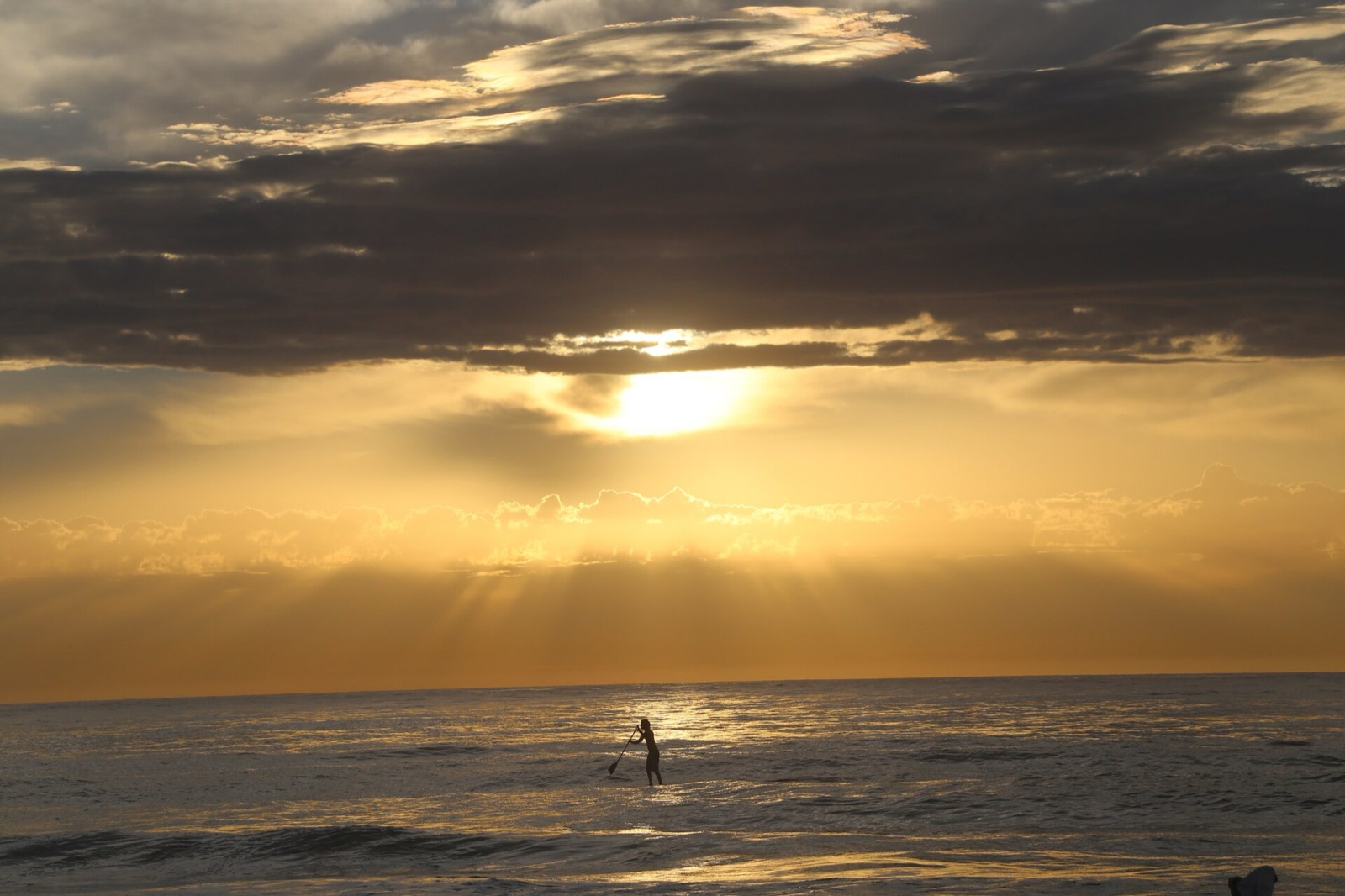
Stand-up paddleboarding is one of the easiest water sports to pick up in Costa Rica, as long as you choose sheltered water and go early before the wind builds. The best spots are protected bays in Guanacaste and southern Nicoya, the calm Golfo Dulce in the south, river estuaries and, for confident paddlers, Lake Arenal on still mornings.
What SUP is, and why it suits Costa Rica
Stand-up paddleboarding, or SUP, means standing on a long, wide board and moving yourself along with a single-bladed paddle. It grew out of surfing in Hawaii, where Waikiki instructors stood on their boards to keep an eye on students, and it has spread around the world over the last few decades.
It's popular in Costa Rica for good reason. The water is warm, falling in is part of the fun, and from a standing height you can see down into the water: rays gliding over the sand, turtles surfacing, fish around the rocks. On a calm morning in a sheltered bay, a complete beginner can be paddling comfortably within an hour. In the surf, it becomes a much more demanding sport.
The 2 golden rules: sheltered water and early starts
Almost every bad SUP experience in Costa Rica comes from wind, not waves. A board is basically a sail with you standing on it. Once the breeze picks up, usually from late morning, paddling upwind gets hard fast.
- Go early. The first few hours after sunrise are usually the calmest on both coasts.
- Start upwind. Paddle into the wind on the way out, so it helps you home when you're tired.
- Respect offshore wind. In northern Guanacaste, the Papagayo winds blow from the land out to sea, strongest from about November to March and peaking around February. Offshore wind can push a tired paddler out to sea quickly. On windy days, stay close to shore or don't go.
Where to paddle on the Pacific
Guanacaste bays. The Gulf of Papagayo coast has a string of curving bays where the water is often glassy at dawn: around Playa Hermosa, Playa Panamá and Bahía Culebra, Playas del Coco, Ocotal, Flamingo and Potrero. Paddle along the rocky points to look for fish and turtles, and come in before the wind builds. See our Guanacaste section for the area.
Sámara and Carrillo. Sámara's bay is partly sheltered by an offshore reef and island, which keeps it calmer than much of the Nicoya coast. It's a good place to learn.
River estuaries. Several Pacific rivers meet the sea in slow, mangrove-lined estuaries that are good for spotting birds. Go with a local guide. Some estuaries in Costa Rica have crocodiles, so ask before you paddle and never trail your legs in the water.
Gulf of Nicoya and southern Nicoya. The inner gulf around Paquera, Curú and the small islands is generally calmer than the open coast, though tidal currents run hard in the channels. Our southern Nicoya and Central Pacific sections cover the area.
Manuel Antonio and Uvita. Coves in the Manuel Antonio area and the Marino Ballena coast near Uvita can be paddled on small-swell mornings. From December to April, and again from about July to October, humpback whales use these waters. Give them plenty of room.
Golfo Dulce. Between the Osa Peninsula and the mainland, near Golfito and Puerto Jiménez, Golfo Dulce is one of the calmest large bodies of saltwater in the country. Dolphins are common. It's well suited to longer touring paddles. See our Southern Pacific section.
The Caribbean and inland options
South Caribbean. Near Puerto Viejo, beaches like Punta Uva can be flat on calm days, with clear water over patch reefs. The Caribbean is often calmest in September and October. Watch for currents and stay inside the reef.
Lake Arenal. Costa Rica's largest lake (about 85 square kilometers) sits below Arenal Volcano. From November through April its western end gets strong, steady winds that attract windsurfers and kitesurfers, so paddle in the early morning and stay near shore. When it's calm, it's a memorable paddle.
Board types and gear
- All-round boards: The standard beginner board, usually 10 to 12 feet long and wide enough to feel stable.
- Inflatable boards: Made from a drop-stitch core in PVC. They're stable, forgiving when you fall and pack into a backpack, which makes them popular for travel and rentals.
- Touring boards: Longer and narrower, with a pointed nose that glides and holds a straight line. Good for longer paddles in the Golfo Dulce or along the coast.
- SUP surf boards: Shorter and narrower, usually under 10 feet. They turn well but are much less stable.
Other gear that matters:
- Paddle: Should reach roughly to your wrist when you raise your arm overhead, with the blade's angle tilted forward.
- Leash: A coiled leash attached to your ankle or calf keeps the board close if you fall. Your board is your best float, so stay attached. On rivers, use a quick-release belt instead, since a leash can snag on branches.
- Life jacket or inflatable belt pack: Wear one, especially away from shore. Rental and tour operators usually provide one.
- Sun protection: A long-sleeved rash guard, a hat with a strap and water. You're standing in full sun with nothing between you and it.
How to get started
- Kneel first. Paddle on your knees in calm, waist-deep water until the board feels steady.
- Stand in one move. Place your feet where your knees were, hip-width apart, either side of the carry handle. Keep your knees soft and your eyes on the horizon, not your feet.
- Paddle with your core. Reach forward, put the whole blade in, and pull it back to your feet using your body, not just your arms. Switch sides every few strokes to go straight.
- Fall away from the board. Aim to fall flat into the water to the side, not onto the board or a rock.
A 1-hour lesson saves a lot of frustration, and a guided tour takes care of reading the wind and finding the calm water.
Safety basics
- Check the forecast for wind and swell, and ask locally.
- Paddle with someone, and tell a friend where you're going and when you'll be back.
- Stay out of the surf zone unless you're experienced. Breaking waves and a heavy board are a bad mix around swimmers.
- Rip currents can carry you out from beaches. If one catches you, don't fight it: paddle parallel to the shore until you're out of it, then head in.
- Watch for wildlife and boats. Give turtles, dolphins and whales space, and stay clear of fishing boats and anchor lines.
- Ask about crocodiles before paddling estuaries or river mouths, as the tourism board advises for surf beaches too.
SUP and other water days
Paddleboarding mixes well with other trips. Some sailing tours and yacht charters carry boards for anchorage stops. If you'd rather sit down, our kayaking guide covers sea and river kayaking, and when you're ready for waves, see the surfing guide. The water sports section has more ideas.
Frequently asked questions
Is SUP hard to learn?
Not on calm water. Most people stand up and paddle within their first session. It gets harder in wind, current and waves, which is why sheltered spots and early mornings matter.
Where is the calmest water for paddleboarding in Costa Rica?
Golfo Dulce in the south, the inner Gulf of Nicoya and the sheltered bays of Guanacaste on calm mornings are the most reliable. Sámara's bay is a good beginner spot.
When is the best time to go?
Early morning, all year. On the Pacific, the dry season (December to April) brings sunny days, but northern Guanacaste is windy from about November to March. The Caribbean is often calmest in September and October.
Do I need a life jacket?
It's strongly recommended, especially away from shore, and tour operators usually provide one. A leash keeps your board, your best float, close by.
Can I paddleboard with kids?
Yes, on calm, shallow water. Young children often ride on the front of an adult's board. Everyone should wear a life jacket.