Guide
Sportfishing in Costa Rica
Seasons, species, licenses and billfish rules
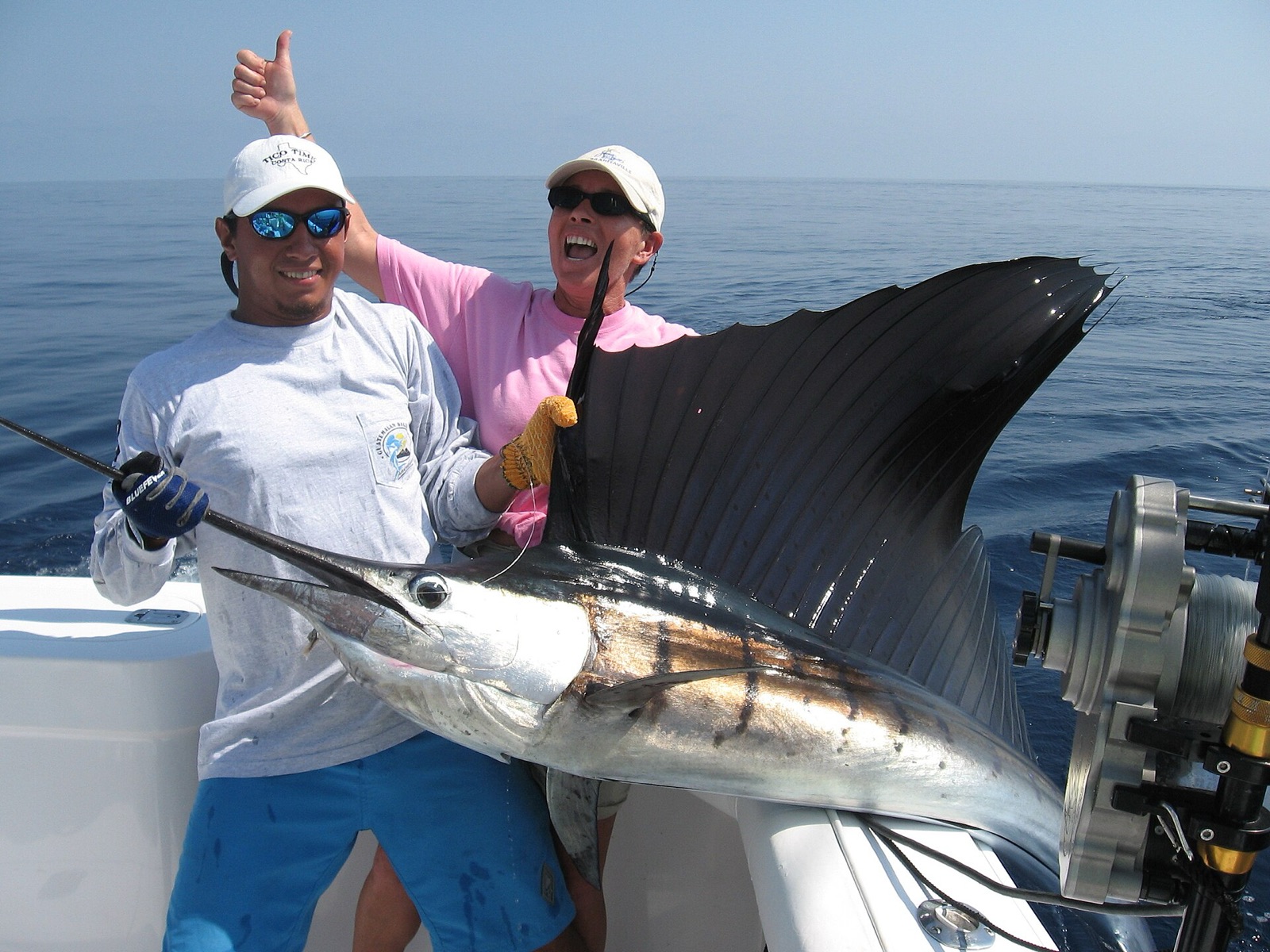
Costa Rica is best known for Pacific sailfish and marlin, with roosterfish, snapper, tuna and mahi-mahi closer in, and tarpon and snook on the Caribbean side. You'll need a sport fishing license from INCOPESCA, and marlin and sailfish are released alive, ideally without being lifted out of the water.
What sportfishing means here
Sportfishing is fishing for fun rather than for food or sale, usually with rod and reel, and in Costa Rica it's largely about the fight and the release. The country sits on rich, deep Pacific water, and in places the continental shelf drops away within a short run of the coast, so boats don't have to travel far to reach big fish. Several international billfish tournaments are held each year at the marinas in Herradura (Los Sueños) and Quepos.
Most visitors fish on a chartered boat with a captain and a mate who supply the tackle, bait and know-how. You don't need any experience: the crew will rig the lines, spot the fish and coach you through the fight.
Inshore, offshore and freshwater
Inshore trips stay within sight of land, around rocky points, reefs and islands, usually for a half day. Targets include roosterfish (the classic Pacific inshore fish, with its tall comb-like dorsal fin), snapper, grouper, jacks, mackerel and sometimes small tuna. Inshore trips suit families, beginners and anyone prone to seasickness, since the water is calmer and the runs are short.
Offshore trips head out to deep blue water, often 15 to 40 miles out, for a full day. Here you're after sailfish, blue, black and striped marlin, yellowfin tuna, mahi-mahi (dorado) and wahoo. Crews often troll lures or teasers and switch to live or rigged bait when a billfish shows up. Boats are larger, typically 28 to 45 feet or more, with a cabin and a toilet.
Freshwater and estuary fishing happens on the Caribbean side for tarpon and snook at river mouths and lagoons such as Barra del Colorado and Parismina, on Lake Arenal for guapote (rainbow bass), and in Caño Negro and other northern lowland waters for gar and other species.
When and where the fish are
Seasons overlap and change year to year with water temperature and currents, so treat these as general patterns, not promises.
- North Pacific (Guanacaste: Playas del Coco, Ocotal, Flamingo, Tamarindo, Carrillo, Sámara): fishing is possible all year. Offshore billfish and tuna are often best from about May to August. From roughly December to March, the Papagayo winds can make offshore runs rough in the far north, and boats fish closer in or wait for calm days. Inshore roosterfish and snapper are good much of the year. See Guanacaste.
- Central Pacific (Herradura, Los Sueños, Jacó, Quepos): sailfish numbers usually peak from about December to April, which is when the big tournaments run. Marlin, tuna and mahi-mahi turn up through much of the year, and inshore fishing around rocks and islands goes all year. See Central Pacific.
- South Pacific (Dominical, Drake Bay, Golfito, Golfo Dulce, Zancudo, Puerto Jiménez): strong for sailfish in the dry season and for inshore fishing much of the year, with excellent roosterfish and snapper. Golfo Dulce is calm and sheltered, which helps on rough days. See Southern Pacific.
- Caribbean (Barra del Colorado, Parismina, Tortuguero area): tarpon fishing is often good from around January to May and again in September and October, and snook runs are strongest late in the year, but rain and river levels drive everything. See Caribbean.
The rainy season (May to November) doesn't stop fishing on the Pacific. Mornings are often calm and clear, and many boats head out early to be back before afternoon storms.
Licenses and the rules you need to know
Get a license. Costa Rica's fisheries institute, INCOPESCA, requires anyone fishing from a boat, local or foreign, to carry a valid sport fishing license (called a carné or licencia de pesca deportiva). You can apply through INCOPESCA's website or at its regional offices, which include coastal towns used by charter fleets. Many captains will help you get one before your trip, but it's your responsibility to have it on board. Licenses are personal and issued for set periods, so check the current options when you buy.
Billfish are released. INCOPESCA says marlin and sailfish are catch-and-release. Good crews keep the fish in the water for photos, then revive it alongside the boat before letting it go. Lifting a big billfish onto the deck or holding it up by the bill can injure it, so don't ask the crew to do that.
Use fish-friendly gear. Circle hooks are standard practice on billfish baits, because they usually hook the fish in the corner of the mouth rather than deep in the throat. Fast fights with properly sized tackle give fish a better chance after release.
Some fish can be kept. Species such as mahi-mahi, tuna, snapper and wahoo can usually be kept within reason, and many lodges or restaurants near the dock will cook your catch. Tarpon is traditionally released, and roosterfish are almost always released too. Rules on bag limits, protected species and closed areas do change, and some marine protected areas don't allow fishing at all, so ask your captain what applies on the day.
Choosing a trip
- Half day inshore: good first taste, with kids, or if you're not sure about seasickness.
- Full day offshore: the trip for sailfish and marlin. Expect an early start and a long day on the water.
- Multi-day fishing lodge: common in the south and on the Caribbean coast, where fishing is the main event and transfers are part of the package.
- Tournaments: if you're in Herradura or Quepos during a tournament week, docks and hotels get busy, so book ahead.
Questions worth asking before you book: what size and type of boat it is, what's included (tackle, bait, drinks, lunch, license help), whether it uses circle hooks, how many lines it runs, what the release practice is, and whether the boat carries a radio, life jackets for everyone and a first-aid kit. Browse sportfishing for operators and marinas for where boats are based.
On the boat
- Take seasickness medication the night before or early in the morning, not once you feel sick.
- Bring a hat, polarized sunglasses, reef-safe sunscreen and a long-sleeve sun shirt.
- Wear non-marking shoes with grip; decks get wet and slippery.
- Listen to the mate when a fish is on: they'll tell you when to reel, when to hold and how to sit in the fighting chair or use a harness.
- Tipping the crew is customary if you've had a good day.
If you're combining fishing with other time on the water, see Sailing in Costa Rica or An introduction to kayaking.
Frequently asked questions
Do tourists need a fishing license in Costa Rica?
Yes. INCOPESCA requires a valid license for anyone fishing from a boat, foreign visitors included. Your charter can often help you get it.
Can I keep a sailfish or marlin?
No. Marlin and sailfish are catch-and-release in Costa Rican sportfishing. Crews take photos with the fish in the water and release it.
When is the best time for sailfish?
On the Central and South Pacific, usually December to April. In northern Guanacaste the offshore season is often best from May to August, but fish are caught all year.
Is sportfishing in Costa Rica good for beginners?
Yes. Captains and mates handle the rigging and coach you through the fight. An inshore half day is the easiest start.
What's the difference between inshore and offshore?
Inshore stays near the coast for roosterfish, snapper and similar species in calmer water. Offshore runs out to deep water for billfish, tuna and mahi-mahi and usually takes a full day.